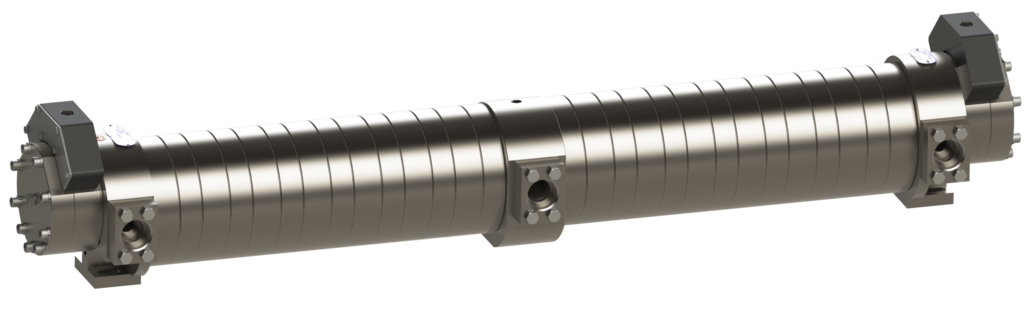
Industrial fluid management often involves navigating complex trade-offs between precision, reliability, and the physical constraints of the substances being moved. When an operation requires the simultaneous, accurate distribution of fluid across multiple output streams, engineers frequently evaluate the role of flow dividers. These components act as a mechanism for splitting a single source stream into multiple segments, providing a level of control that is helpful in applications ranging from hydraulic synchronization to chemical dosing.
The functional mechanics of flow division
At the most basic level, a flow divider is designed to take an incoming volume of fluid and distribute it into two or more separate paths. This is typically achieved through either mechanical gear arrangements or internal spool systems. The goal is to ensure that each downstream branch receives a consistent portion of the flow, regardless of the variations in pressure that may occur at the individual work points.
In many industrial settings, the stability of these divisions is essential for the synchronization of multi-actuator systems. If one actuator encounters more resistance than another, a simple branched pipe might experience uneven flow, leading to erratic operation. A flow divider helps mitigate this by forcing a proportional split, which allows the system to maintain uniform movement across its various components. This process is generally viewed as a balance between mechanical complexity and the need for operational stability.
The role of progressing cavity pumps in fluid transport
While flow dividers manage the distribution of fluid, the primary movement of that fluid is often handled by progressing cavity pumps. These systems are distinct due to their ability to handle materials that might challenge other pump designs. By using a rotor that rotates within an internal stator, these pumps create a series of sealed chambers that move fluid from the inlet to the outlet.
This design is often preferred in applications where the fluid has high viscosity, contains suspended solids, or requires a gentle, non-pulsing discharge. Because the fluid is essentially trapped in the moving cavities, the pump produces a steady, predictable output. This characteristic is valuable when the process necessitates a consistent volume, such as in coating, filling, or metering applications. When a project involves highly sensitive or challenging materials, the operational consistency offered by this pump type is typically a primary consideration for facility planners.
Factors influencing component integration
Choosing whether to incorporate specific hardware into an existing infrastructure typically depends on the nature of the fluid and the requirements of the downstream process. Several considerations often guide the selection and configuration process:
- Fluid characteristics: Materials that are highly abrasive or shear-sensitive may interact differently with the internal components of both pumps and dividers. Understanding how a substance behaves under pressure and movement is a critical step in preventing premature wear.
- System pressure requirements: The ability of a component to maintain its performance under varying load conditions can determine the success of the installation. In some cases, high-pressure environments may necessitate materials or internal clearances that differ from standard, lower-pressure applications.
- Maintenance accessibility: Systems that integrate multiple components like dividers and pumps benefit from a design that allows for regular inspection. Practitioners often ask providers about the expected service intervals and the level of effort required to access internal seals or moving parts.
- Operational environment: Factors such as temperature, ambient debris, and the duty cycle of the equipment influence how these components are mounted and shielded. A setup intended for continuous operation will have different requirements than one used intermittently.
Aligning hardware choices with operational needs
The decision to implement or upgrade these components is rarely just about the hardware itself; it is about how that hardware serves the wider production goal. Facility managers and engineers often start by clearly defining the range of flow rates and the degree of accuracy required for their specific application.
If an operation struggles with inconsistent output or uneven synchronization, the investigation typically begins with an audit of existing flow distribution mechanisms. It is often helpful to walk through the system with a knowledgeable provider to identify where pressure drops are occurring or where the current hardware may be hitting its performance limits.
When reviewing options, consider how the components will scale with the operation. An architecture that works well for a current volume might need to be adjusted if production levels increase or if the characteristics of the fluids being handled change. Asking a provider to explain the potential failure modes of a specific configuration is often more informative than simply reviewing a specification sheet. Understanding how a system behaves when it is pushed to its limits—and how it recovers—provides a clearer picture of long-term reliability than static data alone.
Empowered decision-making in industrial settings starts with recognizing the interplay between movement and distribution. By focusing on the functional mechanisms of progressing cavity pumps and the control provided by flow dividers, teams can design systems that are not only effective but also adaptable to the evolving demands of their operations. Aligning these components with the specific realities of the work site—rather than relying on generalized assumptions—remains the most effective way to ensure long-term functionality.