
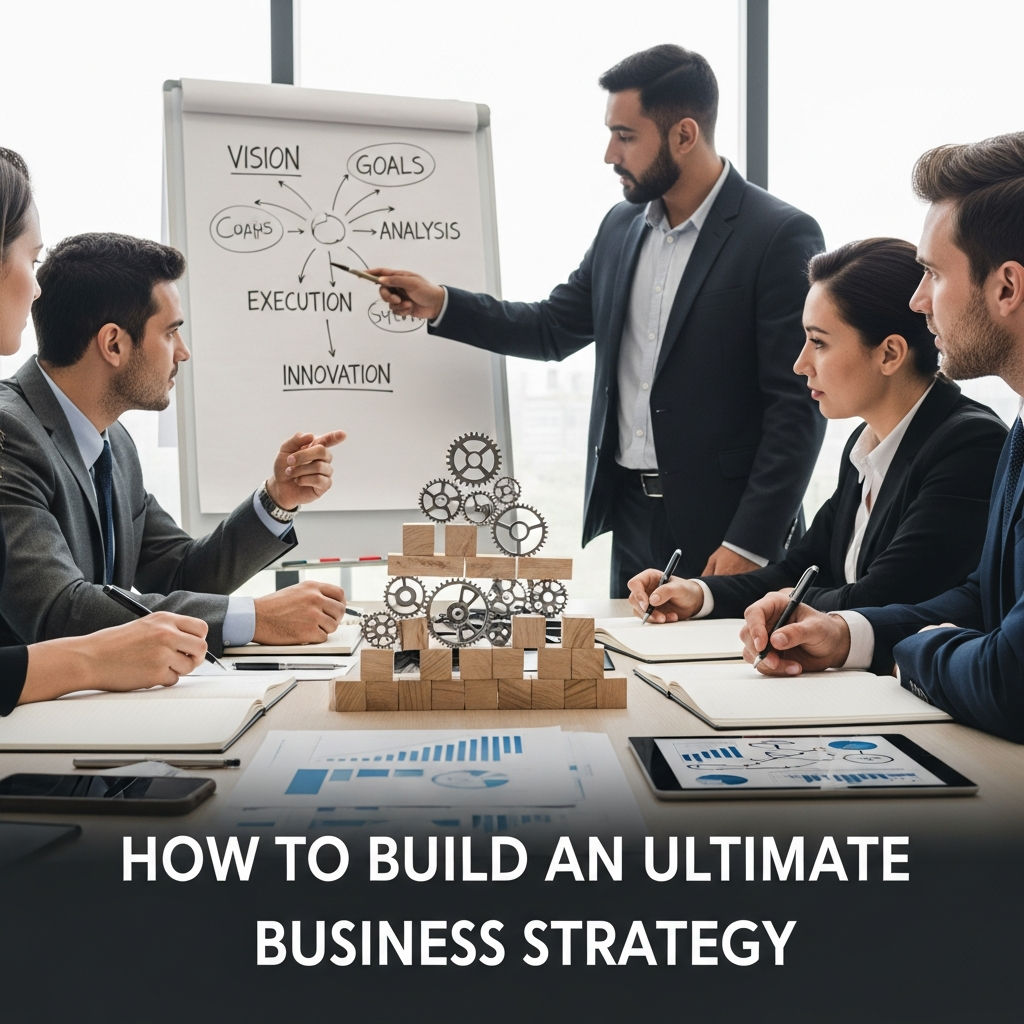
How to Build an Ultimate Business Strategy: Your Blueprint for Lasting Success
In today’s hyper-competitive and rapidly evolving business landscape, simply having a product or service is no longer enough. To truly thrive and achieve sustainable growth, every organization needs an “ultimate business strategy.” This isn’t just a document; it’s a dynamic, comprehensive blueprint that guides every decision, aligns all efforts, and propels your business towards its grandest aspirations. Without a well-defined strategy, businesses often drift, react to crises, and miss out on significant opportunities. This article will walk you through the essential steps to develop, implement, and adapt a robust business strategy that positions your company for enduring success.
Understanding the Foundations: Before You Build Your Strategy
Before you can construct a formidable business strategy, you must first lay a solid foundation. This involves deep introspection and a thorough understanding of both your internal capabilities and the external environment.
Define Your Vision, Mission, and Values
These core elements are the North Star for your entire organization. They articulate your purpose and the principles that govern your actions:
- Vision Statement: What does your company aspire to become? It’s your long-term, aspirational goal – a picture of the future you want to create.
- Mission Statement: What business are you in? Who do you serve? How do you do it? This defines your core purpose and current operations.
- Core Values: What principles guide your employees’ behavior and decisions? These are the ethical and operational standards that shape your company culture.
Conduct a Thorough Situational Analysis (SWOT & PESTEL)
Understanding your current standing is paramount. Two powerful tools can help you achieve this:
- SWOT Analysis:
- Strengths: Internal positive attributes and resources (e.g., strong brand, skilled workforce).
- Weaknesses: Internal negative factors that hinder performance (e.g., outdated technology, lack of capital).
- Opportunities: External favorable conditions you can exploit (e.g., emerging markets, new technologies).
- Threats: External unfavorable conditions that could harm your business (e.g., new competitors, economic downturns).
- PESTEL Analysis: This framework analyzes the broader external environment:
- Political: Government policies, stability, regulations.
- Economic: Economic growth, interest rates, inflation.
- Social: Cultural trends, demographics, lifestyle changes.
- Technological: Innovation, automation, R&D.
- Environmental: Climate change, sustainability, resource scarcity.
- Legal: Employment laws, health and safety regulations.
Know Your Market and Customers Inside Out
Success hinges on understanding who you serve and the landscape you operate in. Comprehensive market research is non-negotiable:
- Target Audience: Who are your ideal customers? What are their demographics, psychographics, needs, and pain points?
- Market Trends: What are the current and emerging trends in your industry?
- Competitor Analysis: Who are your direct and indirect competitors? What are their strengths, weaknesses, strategies, and market share? Identify how you can differentiate yourself.
Crafting Your Ultimate Business Strategy: Key Components
With a clear understanding of your foundations, you can now begin to craft the intricate layers of your business strategy.
Set Clear, Measurable Goals (SMART)
Your strategic goals must be more than just aspirations. They need to be:
- Specific: Clearly defined, leaving no room for ambiguity.
- Measurable: Quantifiable so you can track progress.
- Achievable: Realistic and attainable given your resources.
- Relevant: Aligned with your overall vision and mission.
- Time-bound: Have a clear deadline for completion.
These goals will form the backbone of your strategic execution plan.
Develop Your Core Strategic Pillars
What will be your primary avenues for achieving competitive advantage and growth? Common strategic pillars include:
- Differentiation: Offering unique value that sets you apart from competitors (e.g., superior quality, unique features, exceptional service).
- Cost Leadership: Aiming to be the lowest-cost producer in your industry, allowing for competitive pricing or higher margins.
- Innovation: Constantly developing new products, services, or processes to stay ahead.
- Customer Intimacy: Building strong relationships and providing highly customized solutions for specific customer segments.
- Market Expansion: Entering new geographical markets or targeting new customer segments.
Resource Allocation and Capabilities Development
A strategy is only as good as the resources backing it. Determine how you will allocate your vital assets:
- Financial Resources: Budgeting for initiatives, investment in R&D, marketing, and operational upgrades.
- Human Resources: Identifying skill gaps, hiring top talent, training, and developing your workforce to execute the strategy.
- Technological Resources: Investing in the right technology infrastructure, software, and tools to support your strategic goals.
- Operational Capabilities: Ensuring your processes, supply chain, and production capabilities can support your strategic objectives.
Create a Robust Marketing and Sales Strategy
How will you communicate your value and reach your target customers effectively?

- Value Proposition: Clearly articulate the benefits and unique value your business offers.
- Branding: Develop a strong brand identity that resonates with your audience.
- Marketing Channels: Choose the most effective channels (digital marketing, content marketing, social media, traditional advertising, PR) to reach your customers.
- Sales Process: Define your customer acquisition and retention strategies, from lead generation to post-sale support.
Operational Strategy: How You’ll Execute
This component details the “how” of your strategy – the internal processes and systems that will bring it to life:
- Process Optimization: Streamlining workflows, improving efficiency, and reducing waste.
- Supply Chain Management: Ensuring reliable and cost-effective procurement and delivery of goods and services.
- Technology Integration: Leveraging technology to automate tasks, improve data analysis, and enhance customer experience.
- Organizational Structure: Aligning your organizational chart, roles, and responsibilities to support strategic execution.
Financial Strategy: Fueling Growth and Sustainability
The financial strategy underpins all other elements, ensuring your business has the necessary capital to operate and grow:
- Budgeting & Forecasting: Developing financial plans, projecting revenues and expenses, and managing cash flow.
- Funding Sources: Identifying and securing appropriate funding (bootstrapping, debt, equity).
- Profitability & Revenue Streams: Analyzing current revenue models and exploring new income-generating opportunities.
- Risk Management: Identifying potential financial risks and developing mitigation strategies.
Implementing and Adapting Your Strategy
Even the most brilliant strategy is useless without effective implementation and continuous adaptation.
Communication and Buy-in
For a strategy to succeed, everyone within the organization must understand it, embrace it, and feel a sense of ownership. Communicate the vision, mission, goals, and their individual roles clearly and consistently.
Establish Key Performance Indicators (KPIs)
How will you measure success and track progress towards your SMART goals? Identify specific KPIs for each strategic area (e.g., customer acquisition cost, employee retention rate, market share, revenue growth, profit margin). Regularly monitor these metrics.
Regular Review and Adaptation
The business world is rarely static. Your ultimate business strategy should be a living document, not one etched in stone. Conduct regular reviews (quarterly, annually) to assess progress, evaluate market changes, and identify areas for adjustment. Be prepared to pivot or refine your strategy as new opportunities or threats emerge.
Foster a Culture of Continuous Improvement
Encourage experimentation, learning from both successes and failures, and proactive problem-solving. A culture that embraces change and continuous improvement will ensure your strategy remains relevant and effective over time.
Common Pitfalls to Avoid
As you embark on building your ultimate business strategy, be mindful of common traps:
- Lack of Clarity: Vague goals or an unclear vision.
- Ignoring Market Changes: Failing to adapt to evolving customer needs or competitive landscapes.
- Poor Communication: Employees not understanding or aligning with the strategy.
- Insufficient Resources: Setting ambitious goals without allocating adequate financial or human capital.
- Failure to Monitor & Adapt: Treating the strategy as a one-time exercise rather than an ongoing process.
Conclusion
Building an ultimate business strategy is an intensive yet incredibly rewarding endeavor. It provides direction, fosters alignment, optimizes resource allocation, and ultimately serves as your compass for sustainable growth and success. By diligently defining your foundations, crafting comprehensive strategic components, and committing to dynamic implementation and adaptation, you empower your business to navigate challenges, seize opportunities, and achieve its fullest potential. Start building your blueprint for lasting success today!