
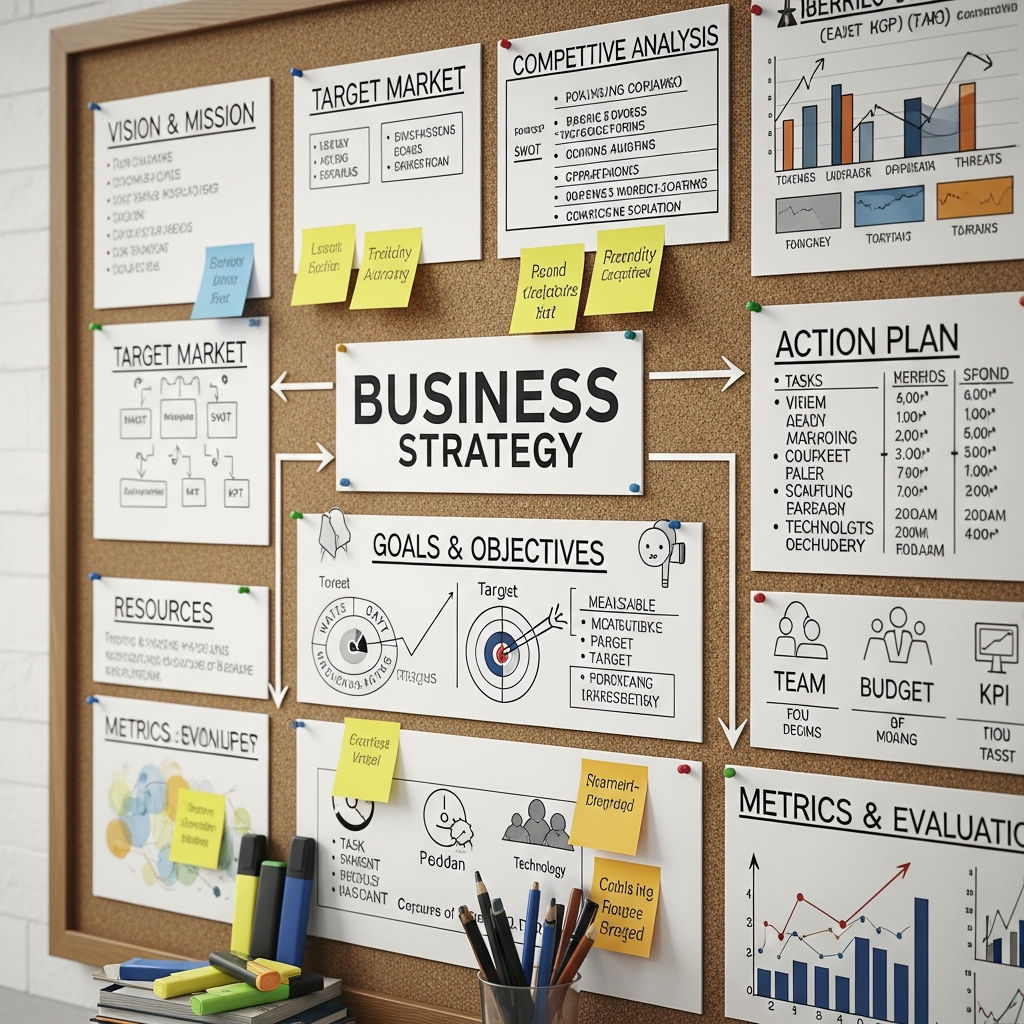
The Foundation of Success: How to Build a Professional Business Strategy
Every successful enterprise, from a budding startup to a multinational corporation, owes its achievements to a clear, well-defined business strategy. Without a robust strategy, businesses often drift, react impulsively to market changes, and ultimately struggle to achieve sustainable growth. A professional business strategy acts as your company’s compass, guiding decisions, allocating resources effectively, and ensuring every effort aligns with your long-term objectives.
Building a professional business strategy isn’t a one-time event; it’s a dynamic, iterative process that requires careful thought, analysis, and commitment. This comprehensive guide will walk you through the essential steps to develop a strategic framework that not only withstands the test of time but also propels your business towards unparalleled success.
Step 1: Define Your Vision, Mission, and Core Values
The very first step in how to build a professional business strategy is to establish your organizational identity. This foundational element articulates who you are, what you aspire to be, and what principles guide your journey.
Vision Statement: Where are you going?
Your vision statement is a long-term aspiration, painting a vivid picture of what your company hopes to achieve in the future. It should be inspiring, challenging, and provide a clear direction for everyone involved.
- Inspiring: It should motivate employees and stakeholders.
- Future-Oriented: Focus on what you want to become.
- Concise: Typically a single sentence or a short paragraph.
Mission Statement: What do you do and for whom?
While the vision is about the future, your mission statement defines your company’s core purpose, its current business, and its primary objective. It outlines what you do, for whom, and what value you provide.
- Purpose-Driven: Explains why your business exists.
- Customer-Centric: Often highlights the target audience and their needs.
- Action-Oriented: Describes the business’s main activities.
Core Values: What do you stand for?
Core values are the fundamental beliefs and guiding principles that dictate your company’s culture and behavior. They influence decision-making, employee conduct, and customer interactions.
- Guiding Principles: The ethical compass for your business.
- Reflect Culture: Define the kind of workplace you foster.
- Influence Decisions: Help in making choices aligned with your integrity.
Step 2: Conduct a Thorough Situational Analysis (Internal & External)
With your foundational identity in place, the next crucial step in business strategy development is to understand your current landscape. This involves an in-depth analysis of both your internal capabilities and the external environment.
Internal Analysis: Understanding Your Strengths and Weaknesses
Look inwards to identify what your company does well and where it falls short. This self-assessment is critical for leveraging your competitive advantages and addressing vulnerabilities.
- Strengths: Internal capabilities, resources, and unique selling propositions that give you an advantage (e.g., strong brand, skilled workforce, proprietary technology).
- Weaknesses: Internal limitations or disadvantages that hinder performance (e.g., lack of capital, outdated technology, poor brand recognition).
A SWOT analysis (Strengths, Weaknesses, Opportunities, Threats) is an excellent tool here.
External Analysis: Identifying Opportunities and Threats
Next, scan the external environment for factors that could impact your business. This helps you capitalize on market trends and prepare for potential challenges.
- Opportunities: Favorable external factors that your company could exploit (e.g., emerging markets, technological advancements, shifting consumer preferences).
- Threats: Unfavorable external factors that could pose risks to your business (e.g., new competitors, economic downturns, regulatory changes).
Tools like PESTLE analysis (Political, Economic, Social, Technological, Legal, Environmental) and Porter’s Five Forces can provide a structured approach to understanding the broader industry landscape and competitive dynamics.
Step 3: Set Clear, Measurable Strategic Goals (SMART)
Once you know where you want to go (vision) and where you stand (analysis), the next step in building a professional business strategy is to define the specific strategic goals that will bridge this gap. These goals must be tangible and actionable.
- Specific: Clearly defined, not vague. What exactly do you want to achieve?
- Measurable: Quantifiable, so you can track progress. How will you know when you’ve succeeded?
- Achievable: Realistic and attainable within your resources and timeframe. Is it possible?
- Relevant: Aligned with your overall vision and mission. Does it matter to your business?
- Time-bound: Have a clear deadline for completion. When will it be achieved?
For example, instead of “increase sales,” a SMART goal would be “Increase online sales revenue by 20% within the next 12 months.”
Identifying Key Performance Indicators (KPIs)
For each strategic goal, identify Key Performance Indicators (KPIs). These are the specific metrics you will use to measure your progress and evaluate the success of your strategies. KPIs transform abstract goals into concrete, trackable benchmarks.
Step 4: Formulate Your Strategic Initiatives and Action Plans
With your SMART goals established, it’s time to determine how you will achieve them. This involves crafting strategic initiatives and detailed action plans.
Developing Strategic Pillars
Strategic pillars are the broad, overarching areas of focus that will drive your company toward its goals. These might include:
- Market Expansion (e.g., enter two new international markets)
- Product Innovation (e.g., launch three new flagship products)
- Operational Efficiency (e.g., reduce production costs by 15%)
- Customer Experience Enhancement (e.g., improve customer satisfaction scores by 10%)
Crafting Action Plans
Each strategic initiative needs a detailed action plan. This breaks down the initiative into specific tasks, assigns responsibilities, sets deadlines, and allocates necessary resources. An action plan answers the “who, what, when, where, and how” for each step.
- Tasks: The specific activities that need to be completed.
- Owners: The individual or team responsible for each task.
- Deadlines: The target completion dates.
- Resources: The budget, personnel, and tools required.
- Dependencies: What tasks rely on others being completed first.
Step 5: Implement and Monitor Your Strategy
A brilliant strategy is useless without effective implementation and continuous monitoring. This final stage is where your plans transform into tangible results.
Effective Implementation
Successful implementation requires clear communication, strong leadership, and organizational alignment. Ensure that everyone understands the strategy, their role in it, and how their work contributes to the bigger picture.
- Communicate Clearly: Share the strategy across all levels of the organization.
- Allocate Resources: Ensure sufficient budget, personnel, and technology are available.
- Lead by Example: Management must champion the strategy and embody its values.
- Foster Accountability: Establish clear accountability for task completion and goal achievement.
Continuous Monitoring and Adaptation
A professional business strategy is not static. The market, competition, and internal capabilities constantly evolve. Regularly monitor your progress against your KPIs, gather feedback, and be prepared to adapt.
- Regular Reviews: Schedule weekly, monthly, or quarterly meetings to review progress.
- Analyze Performance: Compare actual results against your targets.
- Be Flexible: Be willing to adjust your plans, initiatives, or even goals if circumstances change or new information emerges.
- Learn and Improve: Use insights from monitoring to refine your strategic approach moving forward.
Conclusion: Your Roadmap to Sustainable Growth
Building a professional business strategy is an intensive but incredibly rewarding process. It provides clarity, aligns efforts, optimizes resource allocation, and ultimately serves as your roadmap to sustainable growth and competitive advantage. By meticulously defining your vision and values, conducting thorough analysis, setting SMART goals, formulating robust action plans, and committing to diligent implementation and monitoring, you empower your business to navigate challenges and seize opportunities with confidence. Embrace this strategic journey, and watch your business thrive.